Chicken is a regular part of many home-cooked meals because it is versatile, easy to season, and works with everything from quick skillet dinners to soups and stews. The problem starts when a perfectly good piece turns out hard, chewy, or dry instead of tender and juicy. This is especially common with boneless chicken breast, which has very little fat and can lose moisture quickly during cooking.
Fortunately, tough chicken is usually the result of a few simple mistakes. Cooking for too long, using excessive heat, choosing the wrong cut, or cooking uneven pieces can all affect the texture. Once you know what causes the problem, it becomes much easier to avoid it. In my kitchen, I have found that a little attention to temperature and cooking time makes a noticeable difference.
Recipe Details
- Prep Time: 10 minutes
- Cook Time: 15–20 minutes
- Total Time: 25–30 minutes
- Servings: 4
- Method: Skillet
- Difficulty: Easy
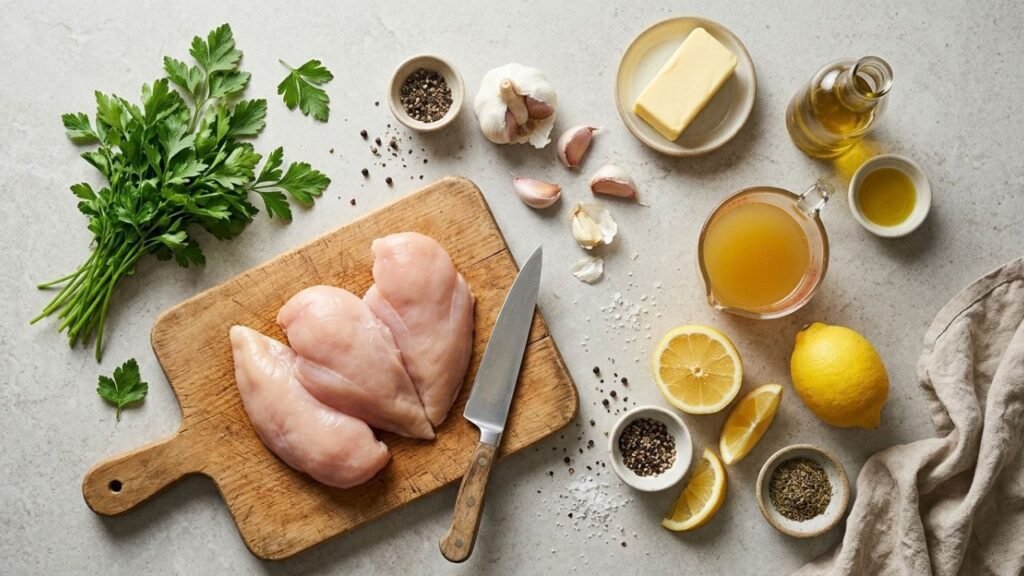
Ingredients:
- 4 boneless, skinless chicken breasts
- 1 tablespoon olive oil
- 1 teaspoon salt
- ½ teaspoon black pepper
- 1 teaspoon garlic powder
- ½ teaspoon paprika
- 2 cloves garlic, minced
- ½ cup chicken broth
- 1 tablespoon lemon juice
- 1 tablespoon butter
- 1 tablespoon fresh parsley, optional
Alternative Ingredients
| Original Ingredient | Easy Alternative |
| Chicken breast | Boneless chicken thighs |
| Olive oil | Avocado oil or canola oil |
| Chicken broth | Vegetable broth or water |
| Fresh garlic | Garlic powder |
| Fresh parsley | Basil, dill, or cilantro |
| Lemon juice | A small splash of white vinegar |
| Butter | Extra olive oil |
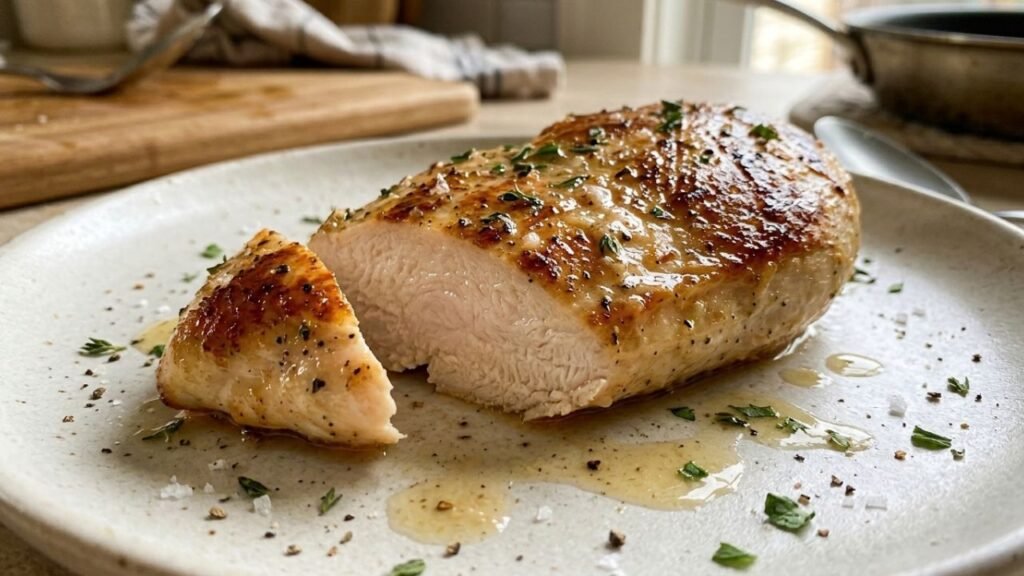
What’s Making Your Chicken Tough?
1. It Was Cooked Too Long
Overcooking is one of the most common causes of dry, firm meat. As chicken stays over the heat, its muscle fibers tighten and release moisture.
Lean breast meat is especially easy to overcook. Use an instant-read thermometer and remove it once it reaches a safe internal temperature instead of leaving it in the pan for extra time.
2. The Pan Was Too Hot
A very hot skillet can brown the outside before the center is ready. Continuing to cook at high heat may leave the exterior dry.
Medium to medium-high heat is usually easier to control. If the surface becomes dark too quickly or the pan starts smoking, reduce the temperature.
3. The Cut Did Not Suit the Recipe
Chicken breasts are lean and generally work best with shorter cooking methods. Thighs contain more fat and connective tissue, so they are better suited to longer cooking.
For stews, braises, and slow-cooked dishes, thighs are often a more reliable choice. Breast meat works well for quick skillet meals when carefully monitored.
4. The Pieces Were Too Thick
Uneven portions can cook at different speeds. A thick breast may still need time in the center after the outside has already started drying out.
Gently pound thick areas to create a more even thickness, or slice a large breast horizontally into thinner portions.
5. There Wasn’t Enough Moisture
Longer cooking benefits from a moist environment. Broth, tomato sauce, or another suitable liquid can help prevent the meat from drying out.
Keep the liquid at a gentle simmer rather than a rapid boil. For skillet recipes, adding a little broth near the end can also create a simple sauce.
6. It Was Sliced Too Soon
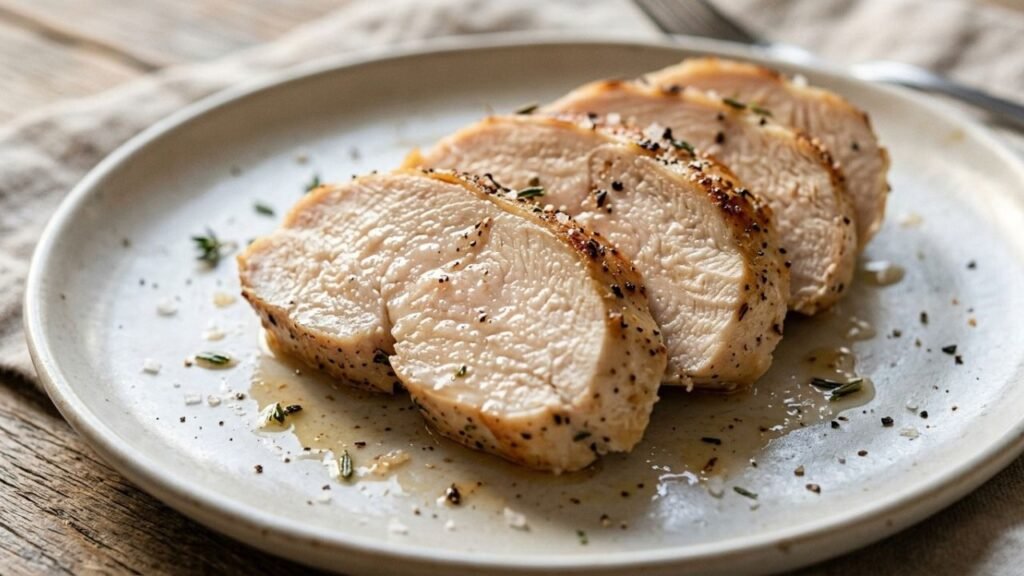
Cutting freshly cooked meat immediately can allow some of its juices to escape. Let the chicken rest for a few minutes before slicing.
When possible, cut across the grain. Shorter muscle fibers are easier to chew and can give the meat a more tender texture.
7. The Chicken Was Naturally Firm
Chicken can vary in texture depending on its size, cut, and processing. Occasionally, a particular piece may simply be firmer than expected.
If you have a naturally firm portion, moist cooking is usually more forgiving. Already-cooked leftovers can be thinly sliced and added to soup, pasta, rice, tacos, or a sauce.
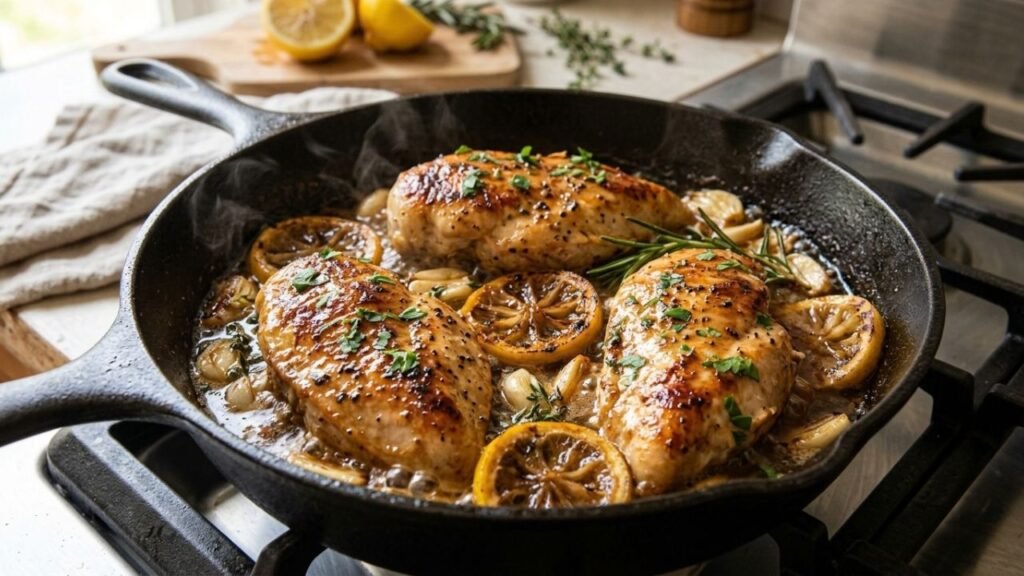
How to Make Chicken Tender
Pat the chicken dry and gently flatten any thick areas so the pieces cook evenly. Season with salt, pepper, garlic powder, and paprika.
Heat oil in a skillet over medium heat and cook the chicken until golden brown on both sides. Add garlic, broth, butter, and lemon juice, then simmer gently until the chicken is cooked through.
Check the thickest part with a thermometer, then remove from the heat and let it rest for a few minutes before slicing. For safe cooking, make sure the chicken reaches 165°F (74°C), following the official website of the United States government redirect on the blog FDAs Safe Minimum Internal Temperature Chart.
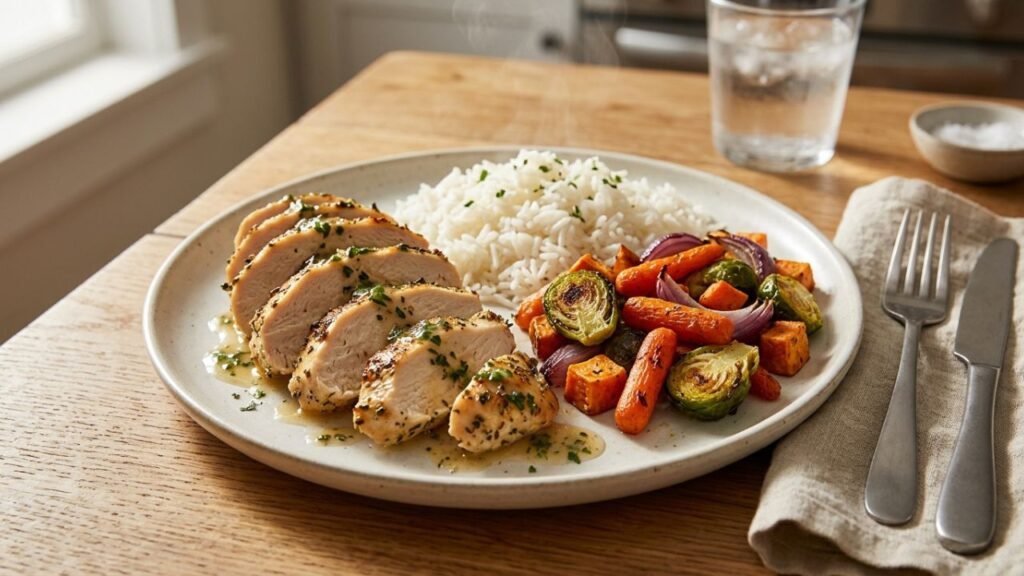
Serving Suggestions
Serve the chicken with simple sides and a refreshing drink for an easy meal.
- Sides: Roasted potatoes, rice, couscous, green beans, fresh salad, roasted carrots, or sautéed mushrooms.
- Sauces: Lemon-herb sauce, pan juices, or light gravy.
- Drinks: Iced tea, hot tea, lemonade, or sparkling water.
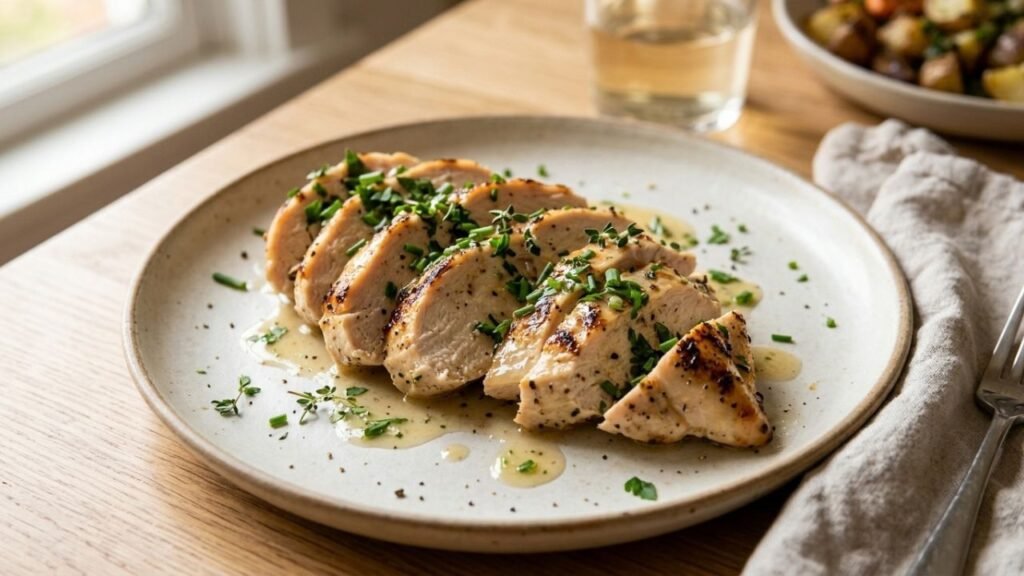
Let the chicken rest briefly, then slice and spoon a little sauce over the top. Leftovers are also useful in wraps, salads, sandwiches, soups, or rice bowls.
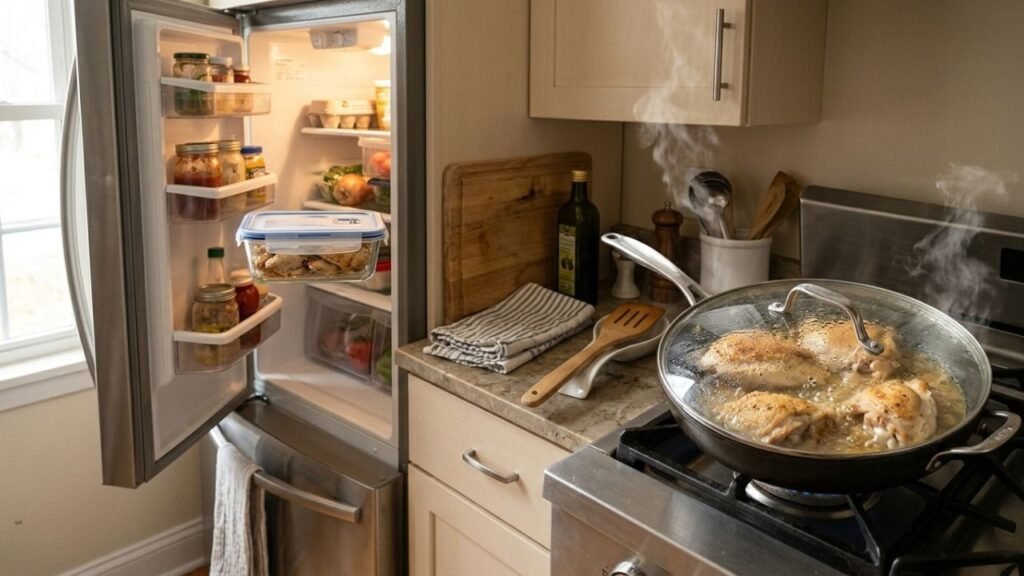
Storage & Reheating Tips
- Store cooked chicken in a covered container and refrigerate it within two hours.
- Keep the refrigerator at 40°F (4°C) or below. For more detailed storage guidance, see the official website of the United States government redirect on the blog Foodsafety.gov Cold Food Storage Chart.
- which provides recommended storage times for cooked meat and poultry.
- Use refrigerated leftovers within 3–4 days.
- Freeze portions in airtight, freezer-safe containers or bags for longer storage.
- Label frozen portions with the date and thaw them safely before reheating.
- Reheat gently with a splash of broth or sauce to help retain moisture.
- Use a covered skillet or microwave, heating only the portion you plan to eat.
- If leftovers develop an unusual smell, appearance, or texture, discard them.
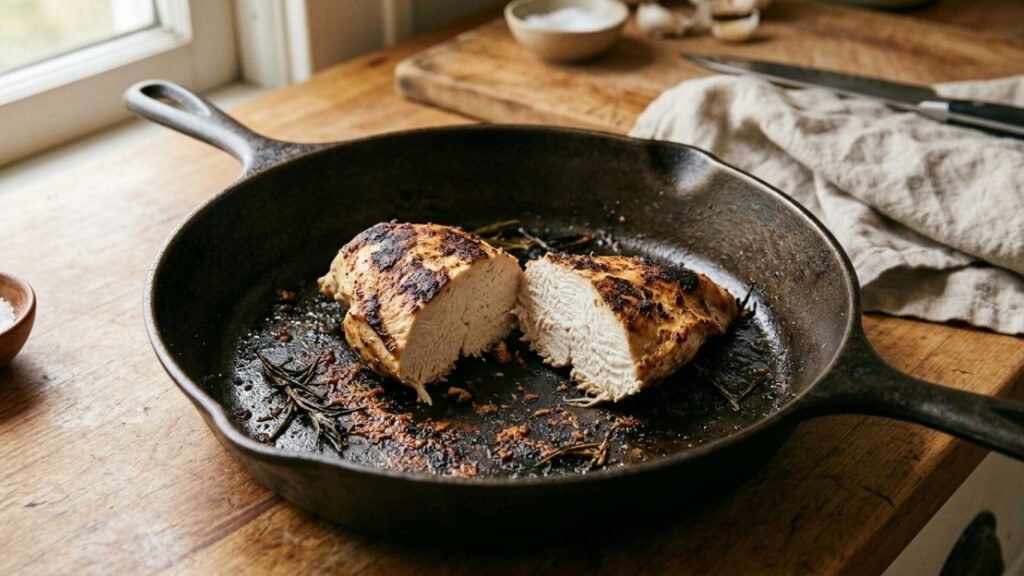
Common Mistakes to Avoid
- Overcooking: Extra time on the heat can quickly dry out lean breast meat.
- Excessive heat: Very high temperatures can brown the outside too quickly.
- Uneven pieces: Thick and thin portions will not finish at the same time.
- Wrong cut: Match the chicken to the cooking method.
- Too little moisture: Long-cooked dishes usually benefit from broth or sauce.
- Skipping the resting period: Give cooked meat a few minutes before slicing.
- Relying only on time: A thermometer gives a more reliable indication of doneness.
- Cooking already-dry meat longer: This generally makes the texture worse rather than better.
Frequently Asked Questions
Why does chicken breast become tough?
Chicken breast is very lean, so it can lose moisture quickly when overcooked. Excessive heat can make the problem worse.
Can tough chicken be made tender again?
Severely overcooked chicken cannot be completely restored, but moisture can improve it. Slice it thinly and serve it with broth, gravy, soup, or sauce.
Are chicken thighs easier to cook?
Generally, yes. Their higher fat and connective-tissue content makes them more forgiving during longer cooking.
Does marinating help with tenderness?
Some marinades can improve both flavor and texture. Yogurt and buttermilk are common choices, while strongly acidic marinades should not be left on for too long.
Should I flatten chicken breast?
If the breast is unusually thick, gently flattening it helps it cook more evenly and reduces the chance of a dry exterior.
Why is slow-cooked chicken still tough?
It depends on the cut. Thighs may need enough time for connective tissue to soften, while breast meat can become dry when cooked for too long.
Conclusion
Tender chicken comes down to a few practical habits: choose the right cut, keep portions evenly sized, control the heat, and avoid unnecessary cooking time. Moisture also matters when you are making a stew, braise, or another longer-cooking dish.
A thermometer can remove much of the guesswork, while a short resting period helps preserve the juices before slicing. With a little attention to temperature, timing, and preparation, chicken can be a reliable and satisfying choice for everyday meals.