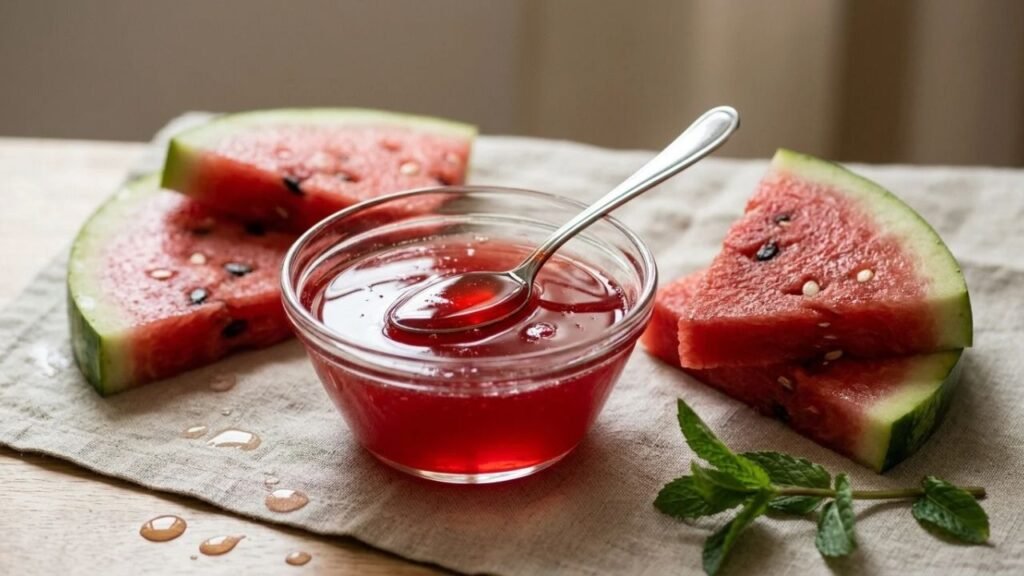
Watermelon honey is a thick, naturally sweet syrup made by slowly cooking fresh watermelon juice until most of its water evaporates. Despite its name, it contains no bee honey; instead, the fruit’s natural sugars become concentrated, creating a rich flavor, a deeper color, and a smooth consistency. This homemade syrup is a simple way to preserve some of summer’s fruity taste and turn ripe watermelon into a versatile ingredient for everyday cooking.
Making it at home requires only fresh watermelon, a saucepan, and a little patience. You can drizzle the finished syrup over pancakes, stir it into yogurt, or use it as a topping for desserts. Choosing fully ripe watermelon helps achieve a naturally sweet flavor without adding extra sugar.
What Is Watermelon Honey Syrup?
Watermelon honey is a thick fruit syrup made by simmering fresh watermelon juice until it reduces. It is also known as watermelon syrup and is traditionally prepared without added sugar.
Since homemade watermelon syrup is not automatically shelf-stable, store it in the refrigerator or freezer. Before attempting room-temperature preservation, check the website University of Georgia Fruit Pureés for safe methods.
Preparation Time
- Preparation: 15–20 minutes
- Cooking: 1½–3 hours
- Total time: Approximately 1 hour 45 minutes to 3 hours 20 minutes
- Difficulty: Easy
- Yield: Depends on the amount of juice and how much it reduces
Cooking time varies according to the watermelon’s water content and the size of the saucepan. A wide, heavy-bottomed pan helps the liquid evaporate more efficiently.
Ingredients:
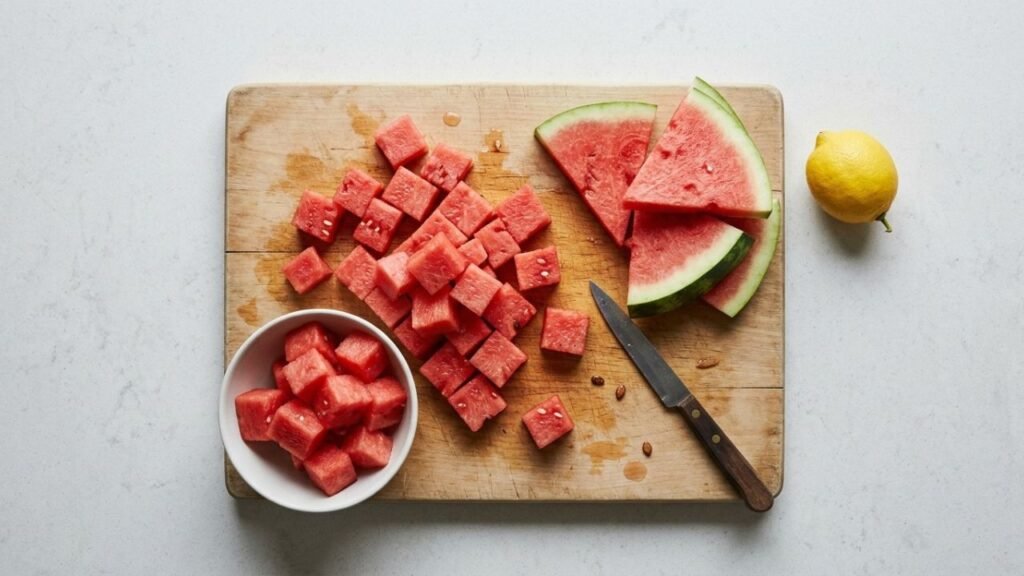
- 1 large ripe watermelon: Enough to produce approximately 2 litres of juice, depending on its size.
- 1–2 teaspoons lemon juice (optional): Helps balance the sweetness.
- Sugar (optional): Usually unnecessary when the fruit is ripe.
You will also need a blender or potato masher, a fine-mesh strainer, a large saucepan, a heatproof spoon, and a clean storage container.
Choose a watermelon with firm flesh, a fresh aroma, and a naturally sweet taste. Ripe fruit gives the syrup better flavor without requiring extra sweeteners.
Step-by-Step Cooking Method
Step 1: Prepare the Watermelon
Wash the outside of the fruit thoroughly before cutting it. Remove the rind, cut the flesh into small cubes, and remove any visible seeds.
Place the cubes in a blender and process until smooth. If you do not have a blender, mash the pieces with a potato masher until they release plenty of juice.
Tip: Choose ripe, juicy watermelon for a naturally sweeter result.
Step 2: Strain the Juice
Place a fine-mesh strainer over a large bowl and pour the blended mixture through it. Gently press the pulp with a spoon to extract more liquid without forcing coarse pieces through the mesh.
Straining removes seeds and excess pulp, helping the finished syrup develop a smoother texture. Measure the juice if you want to keep track of the starting quantity.
Tip: For an especially smooth result, strain the liquid twice.
Step 3: Simmer the Juice
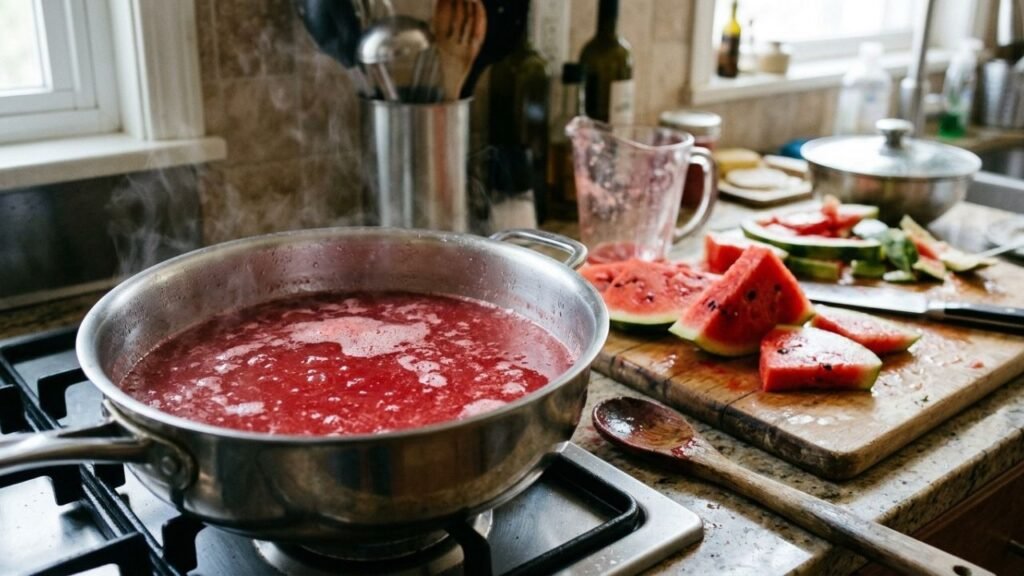
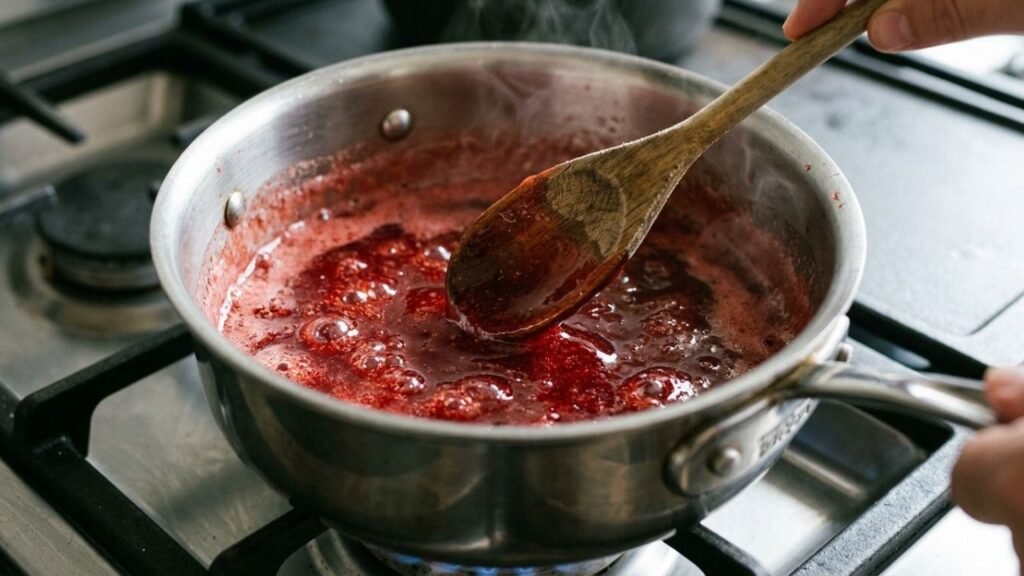
Pour the strained liquid into a wide, heavy-bottomed saucepan. Heat it over medium heat until it begins to simmer, then lower the temperature to maintain gentle bubbling.
A light foam may appear on the surface. Skim it off with a spoon, and leave the pan uncovered so excess water can evaporate.
Stir occasionally to prevent sticking, particularly around the bottom and edges of the pan.
Tip: Avoid rapid boiling, which can make the concentrated sugars scorch more easily later.
Step 4: Reduce Until Thick
Allow the juice to simmer gently for approximately 1–3 hours, depending on the starting quantity. As the liquid evaporates, the color will deepen and the flavor will become more concentrated.
Stir more frequently as the mixture thickens. During the final stage, keep the heat low and watch the pan carefully because concentrated fruit sugars can burn quickly.
If desired, add a small amount of lemon juice near the end. Taste before adding sugar, as ripe fruit usually provides enough sweetness.
Tip: If the mixture develops a burnt smell or begins sticking, lower the heat immediately.
Step 5: Check the Consistency and Cool
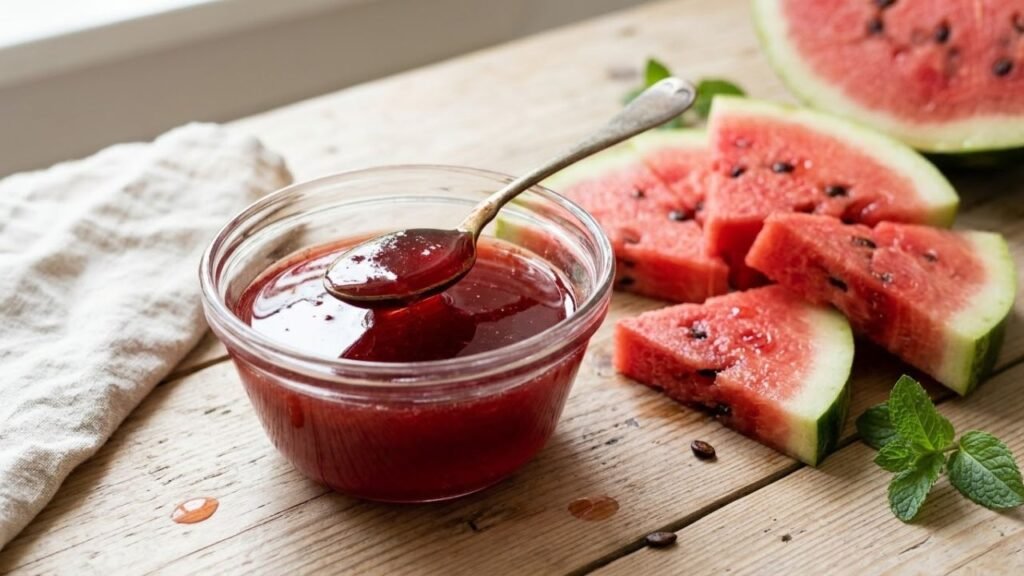
Dip a clean spoon into the syrup and lift it above the pan. It should coat the back of the spoon and fall in a slow ribbon rather than running off like thin juice.
Remove the pan from the heat while the syrup is slightly thinner than your desired final consistency. It will thicken further as it cools.
Allow it to cool safely, then transfer it to a clean, airtight container and refrigerate promptly. If it becomes too thick, gently warm a small portion with a little water.
Tip: Do not wait for the hot syrup to become extremely thick, as it may turn sticky after cooling.
Storage Tips
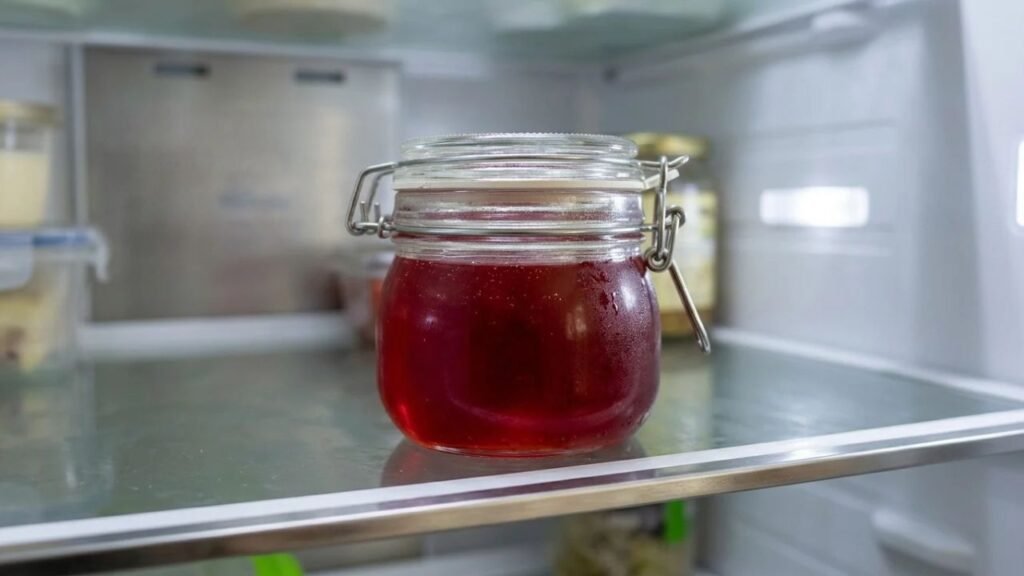
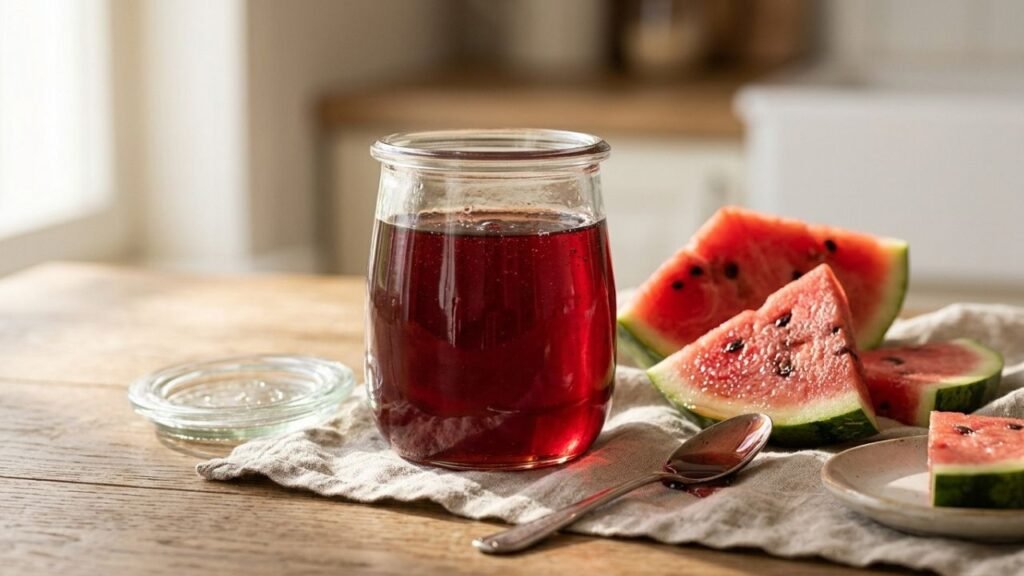
Store the cooled syrup in a clean, airtight container in the refrigerator and use it within 5–7 days as a conservative home-storage guideline. For safe storage, follow the official website of the United States government redirect on the blog FDSs 4 Steps to Food Safety when handling and refrigerating homemade foods.
For longer storage, freeze it in a freezer-safe container for approximately 2–3 months for the best quality. Leave a little space at the top to allow for expansion.
Use a clean spoon when serving and return the container to the refrigerator promptly. Discard the syrup if you notice mold, an unusual fermented smell, or other signs of spoilage. Do not store homemade watermelon honey at room temperature unless you are following a tested preservation method.
Common Mistakes to Avoid
- Using unripe fruit: It may produce a less flavorful syrup.
- Skipping straining: Seeds and coarse pulp can affect the texture.
- Cooking over high heat: Excessive heat can scorch the sugars and create bitterness.
- Adding too much sugar: Ripe watermelon is often sweet enough on its own.
- Overcooking: The syrup thickens as it cools, so remove it from the heat at the right stage.
- Storing it improperly: Refrigerate the finished batch promptly and use clean utensils.
Frequently Asked Questions
1. Is watermelon honey made with real honey?
No. It is made by reducing fresh watermelon juice until it becomes thick and sweet.
2. Do I need to add sugar?
No. Ripe fruit usually provides enough natural sweetness, although a small amount can be added if needed.
3. How long does it take to cook?
The reduction generally takes 1½–3 hours, depending on the amount of juice and the pan used.
4. How can I tell when it is ready?
It should coat the back of a spoon and fall in a slow ribbon. Remember that it thickens further as it cools.
5. Can I make it without a blender?
Yes. Mash the fruit with a potato masher, then strain the juice before cooking.
6. Can I store it at room temperature?
Not by default. Refrigerate it for short-term storage or freeze it for longer storage. Room-temperature preservation requires a validated food-preservation method.
Conclusion
Making watermelon honey at home is a straightforward way to turn fresh summer fruit into a concentrated syrup. With ripe watermelon, gentle heat, and a little patience, you can prepare it without complicated equipment or unnecessary ingredients.
Watch the texture as the liquid reduces, avoid scorching, and remember that the syrup thickens during cooling. Proper storage is just as important as careful cooking, so refrigerate or freeze the finished batch rather than assuming it is shelf-stable.