Beef Base is a simple pantry ingredient that can add rich, savory flavor to everyday meals. Usually sold as a paste or powder, it is a concentrated alternative to beef broth or stock and can be used in everything from gravy and soup to rice, casseroles, stews, and quick pan sauces. Because it is concentrated, you only need a small amount to give a dish more depth without adding much extra liquid.
If your soup tastes bland, your gravy lacks richness, or plain rice needs a flavor boost, this concentrated seasoning can be a simple solution. In this guide, you’ll discover seven easy ways to use it and how to get flavorful results without making your dishes too salty.
Prep Time:
Prep Time: 5 minutes
Cook Time: Varies by recipe
Total Time: Varies by recipe
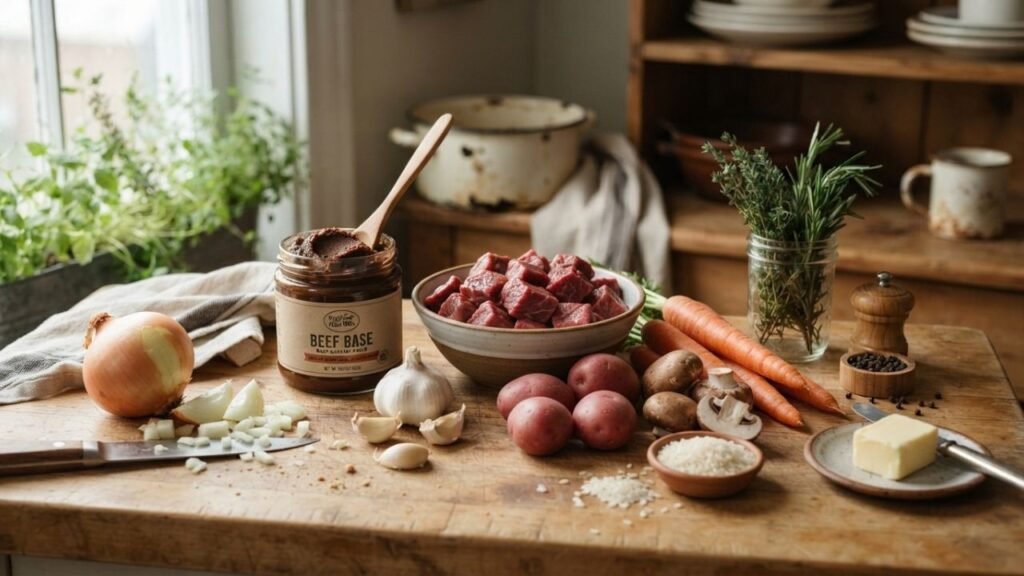
Ingredients:
The ingredients will vary depending on how you use it, but these are common options that pair well with a savory beef flavor:
- Beef Base
- Beef broth or water
- Beef
- Onion
- Garlic
- Potatoes
- Carrots
- Mushrooms
- Rice or noodles
- Fresh or dried herbs
- Black pepper
- Butter or cooking oil
- Vinegar or lemon juice, optional
Tip: Check the product label before adding salt, as some varieties can be high in sodium.
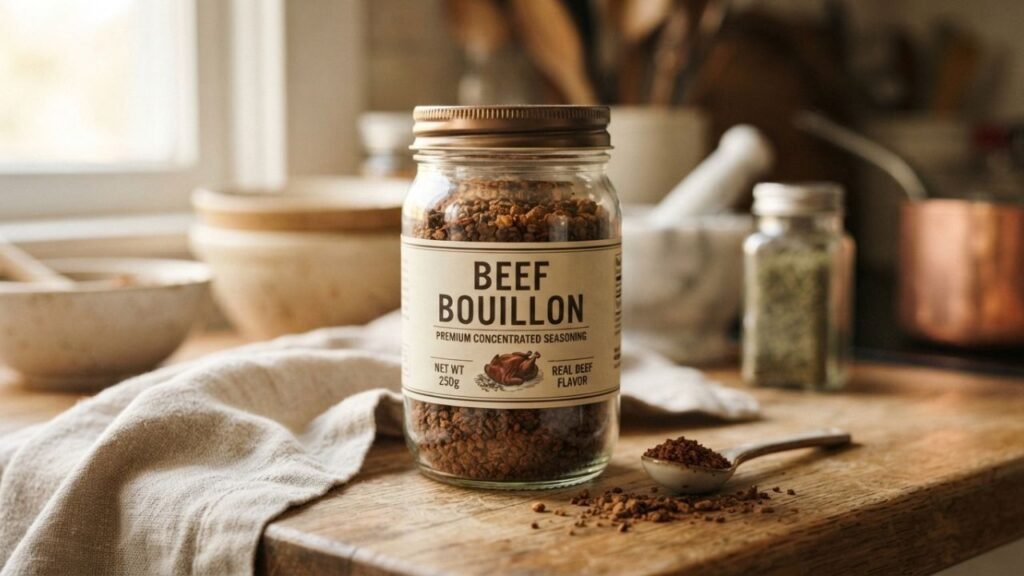
What Is Beef Base?
Beef Base is a concentrated ingredient that adds savory beef flavor to soups, sauces, gravies, and other dishes. It may contain beef stock or extracts along with vegetables, herbs, spices, and salt.
Unlike beef broth, it contains less liquid and is used in smaller amounts or diluted with water. Since salt levels vary by product, check the label before adding extra seasoning.

7 Easy Ways to Use Beef Base
1. Make Gravy More Flavorful
A little concentrated beef seasoning can give homemade gravy extra savory depth. Add it to pan drippings, butter, flour, and meat juices, then simmer until the flavors come together.
Start with a small amount and taste before adding salt.
Best with: roast beef, mashed potatoes, meatloaf, and roasted vegetables.
2. Add Depth to Soups
A simple soup can sometimes taste flat even after adding vegetables and herbs. A small amount of the concentrate can give the broth a fuller, more developed flavor.
Stir it into beef, vegetable, bean, or noodle soup and let everything simmer for a few minutes.
It is especially useful when you are making soup with water instead of homemade stock.
3. Improve Beef Stew
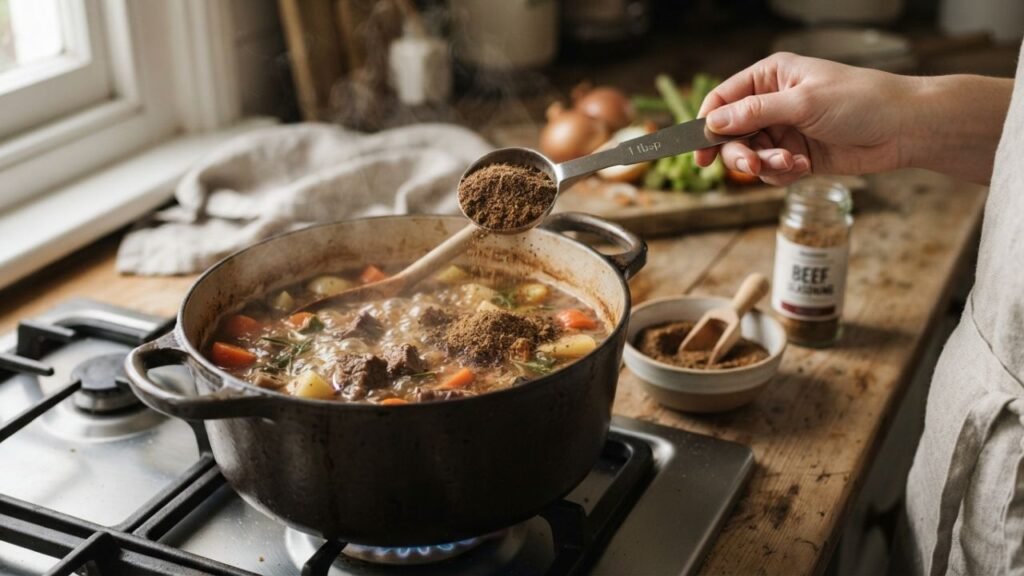
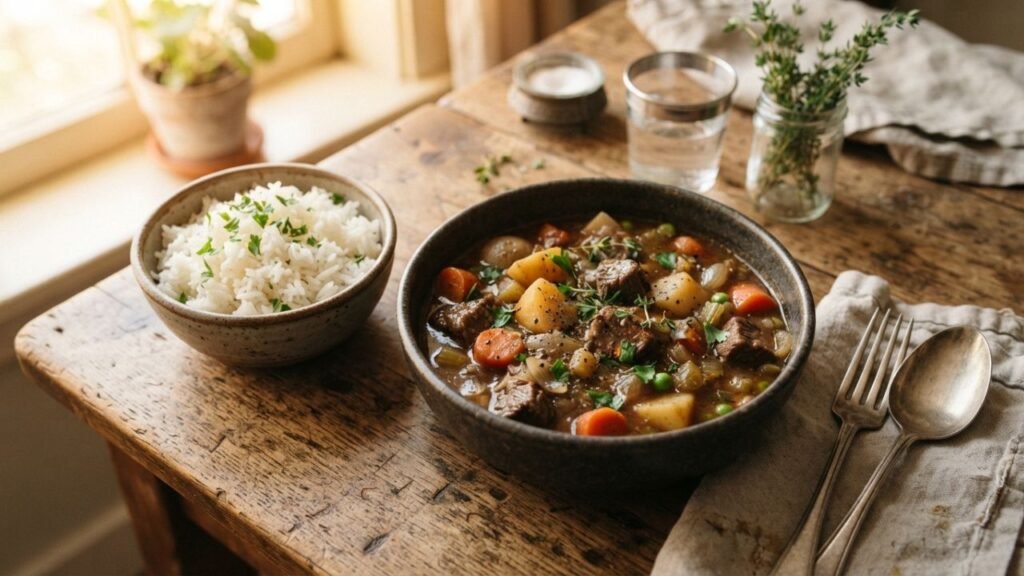
Add a small amount to the cooking liquid when making beef stew with onions, carrots, potatoes, garlic, and herbs.
For better overall flavor, brown the beef before adding the liquid. The browned meat creates additional savory flavors that a seasoning concentrate cannot provide on its own.
4. Give Rice More Flavor
Plain rice can become much more flavorful when cooked in seasoned liquid.
Dissolve a small amount of the concentrate into the water or unsalted broth used for cooking. The grains absorb the savory flavor as they cook.
This works particularly well with rice served alongside beef, meatballs, roasted vegetables, or rich sauces.
5. Enhance Casseroles
A concentrated beef seasoning works well in ground beef casseroles, beef-and-noodle bakes, savory rice dishes, and shepherd’s pie filling.
Stir it into the sauce or cooking liquid before baking so the flavor is distributed evenly throughout the dish.
6. Boost Vegetable Dishes
A small amount can add savory flavor to hearty vegetables such as mushrooms, potatoes, onions, and carrots.
Try mixing a little with unsalted butter or cooking oil before roasting or sautéing the vegetables. Use it sparingly so it complements rather than covers their natural flavor.
7. Make a Quick Pan Sauce
After cooking beef, the browned bits left in the skillet can become the foundation for a quick sauce.
Add a little water or unsalted broth and scrape the browned pieces from the bottom. Stir in a small amount of the concentrate and simmer until slightly reduced. For more tips on using browned bits to build a flavorful pan sauce, see this Serious Eats pan sauce technique guide redirect on blog. How to Make a Pan Sauce, and How to Fix a Broken One.
Finish with black pepper, fresh herbs, butter, or a small splash of vinegar to balance the richness.
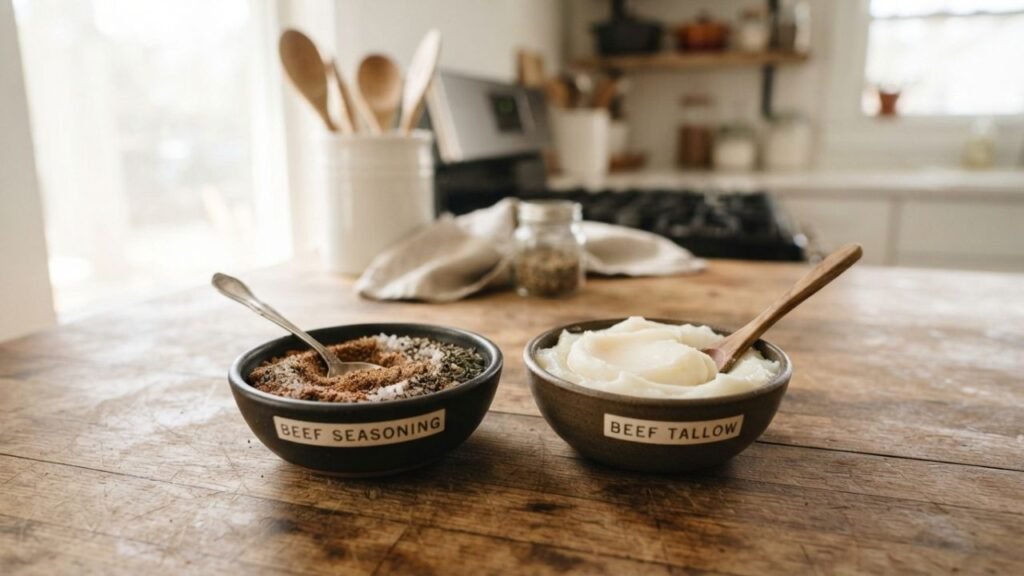
Beef Base vs. Beef Tallow
Beef Base and beef tallow are both useful kitchen ingredients, but they serve different purposes. The first is a concentrated beef-flavored ingredient used to build savory flavor, while beef tallow is rendered beef fat mainly used for cooking, roasting, frying, and adding richness.
| Ingredient | What It Is | Common Uses |
| Beef Base | A concentrated beef-flavored ingredient | Gravies, sauces, soups, stews, rice, and casseroles |
| Beef Tallow | Rendered beef fat | Frying, roasting, sautéing, and adding richness |
| Beef Broth | A ready-to-use liquid with beef flavor | Soups, sauces, rice, and other grains |
| Beef Stock | A liquid made by simmering bones, meat, vegetables, and aromatics | Soups, sauces, braising, and slow-cooked dishes |
These ingredients can sometimes be used in the same recipe, but they are not interchangeable. Tallow provides cooking fat and richness, while the concentrated seasoning is mainly used to strengthen savory flavor.
Common Mistakes to Avoid
- Using too much: Concentrated products can quickly make a dish overly strong or salty.
- Adding salt too early: Taste first because many varieties already contain plenty of sodium.
- Skipping browning: Browned meat and vegetables add important flavor.
- Over-reducing sauces: Evaporation can make a sauce much saltier.
- Forgetting acidity: A small amount of vinegar or lemon juice can balance rich flavors.

Storage and Reheating
Store the product according to the instructions on its package, especially after opening.
Prepared dishes should be refrigerated promptly in covered containers. Most cooked leftovers can be kept for 3 to 4 days when refrigerated at 40°F (4°C) or below. For more guidance on safely storing and reheating leftovers, see the USDA’s food safety recommendations official website of the United States government redirect on blog. Leftovers and Food Safety.
For longer storage, freeze leftovers in airtight, freezer-safe containers.
When reheating gravy or sauce, use gentle heat and add a little water or unsalted broth if it has become too thick.

Frequently Asked Questions
What is Beef Base used for?
It adds concentrated savory flavor to soups, gravies, sauces, stews, rice, casseroles, and other dishes.
Is Beef Base the same as beef broth?
No. Beef broth is a ready-to-use liquid, while the concentrated version is used in smaller amounts or diluted with water.
Can Beef Base replace beef stock?
Yes, in many recipes. Follow the dilution instructions on the package and adjust the seasoning to taste.
Is Beef Base salty?
Many varieties contain a significant amount of sodium. Check the nutrition label before adding additional salt.
Can I use Beef Base in rice?
Yes. A small amount added to the cooking liquid can give rice a deeper savory flavor.
How long do leftovers made with Beef Base last?
Most cooked leftovers should be refrigerated and used within 3 to 4 days. Freeze them if you need to keep them longer.
Conclusion
Beef Base is a convenient way to add concentrated savory flavor to everyday cooking. It can improve gravy, soup, stew, rice, casseroles, vegetables, and quick pan sauces without requiring homemade stock.
The key is moderation. Start with a small amount, follow the package directions, and taste before adding more seasoning. Used carefully, this pantry staple can help make simple meals more flavorful without adding unnecessary complexity.