Soup bones are a simple ingredient for making homemade broth with a deep, savory flavor. Beef, chicken, and lamb bones can all be used to create a versatile cooking base for soups, stews, rice dishes, and sauces. The type of bones, the vegetables you add, and the cooking time all influence the final taste and texture.
Making broth at home does not require expensive ingredients or complicated equipment. A large pot, fresh vegetables, water, and gentle heat are enough to get started. This guide explains how to cook soup bones in five easy steps, choose suitable ingredients, improve the flavor, and store the finished broth safely.
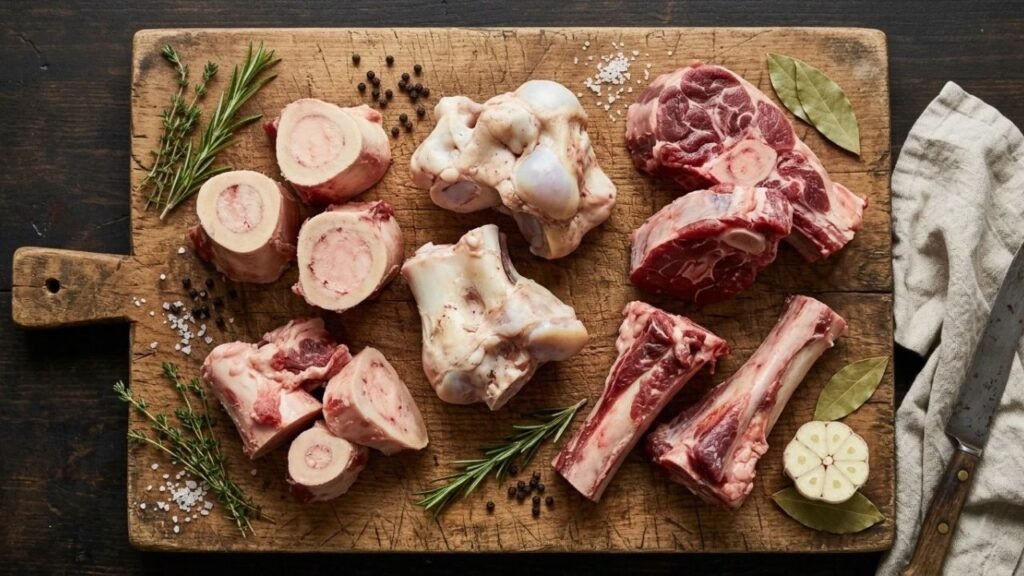
What Are Soup Bones?
Soup bones are bones used to prepare broth and stock. Depending on the animal and cut, they may contain marrow, connective tissue, cartilage, and small amounts of meat.
Different bones contribute different qualities to the finished broth.
- Beef bones: Provide a robust, savory flavor for hearty soups and stews.
- Chicken bones: Produce a lighter broth suitable for noodle soups, rice dishes, and sauces.
- Lamb bones: Add a distinctive flavor to traditional soups and slow-cooked meals.
- Knuckle and joint bones: Contain connective tissue that can release gelatin during prolonged cooking.
- Marrow bones: Add richness and a fuller mouthfeel.
Combining meaty bones with joint bones can create a balanced broth with both flavor and body. Roasting the bones before simmering develops a deeper, browned taste, while cooking them without roasting generally produces a lighter result. Understanding the website of serious eats redirect on the blog explain Most Store-Bought Chicken Stock Isn’t Really Stock—Here’s How It Changes Your Cooking. Can help you choose the right preparation method for your homemade soup bone broth.
Recipe Details
- Preparation Time: 15–20 minutes
- Cooking Time: 4–6 hours
- Total Time: 4 hours 15 minutes to 6 hours 20 minutes
- Yield: Approximately 6–8 cups of broth
- Cooking Method: Stovetop
- Main Ingredient: Beef soup bones
Cooking time can vary according to the size of the bones, the amount of water, and how concentrated you want the broth to be.
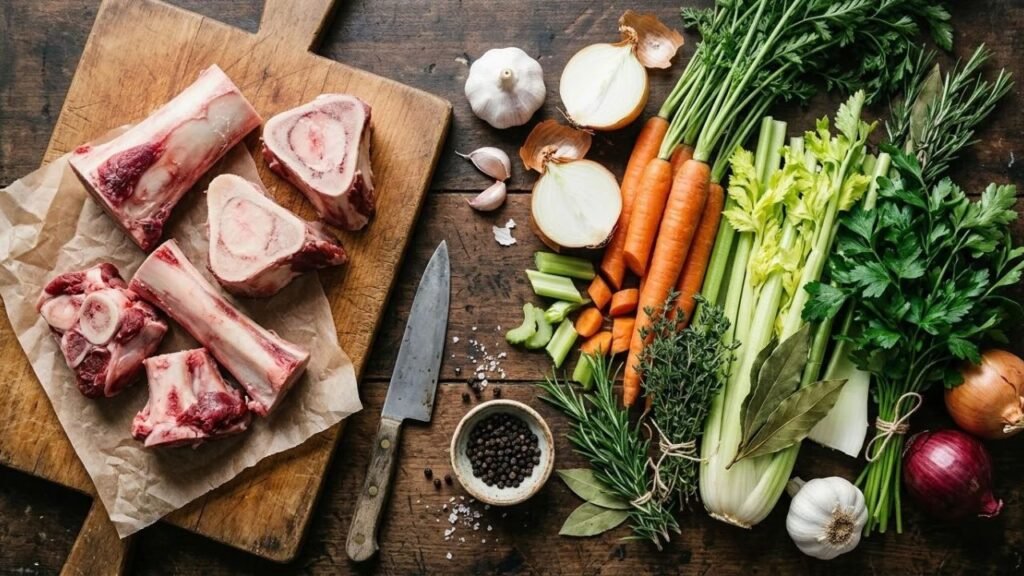
Ingredients You’ll Need
The following ingredients make a flavorful beef bone broth. You can adjust the quantities slightly depending on the size of your pot and the amount of broth you need.
- 2 pounds beef soup bones
- 10 cups cold water, or enough to cover the bones
- 1 medium onion, quartered
- 2 carrots, roughly chopped
- 2 celery stalks, chopped
- 2 garlic cloves, crushed
- 1 bay leaf
- 6–8 whole black peppercorns
- A few parsley stems or 1 small thyme sprig, optional
- 1–2 teaspoons vinegar, optional
- Salt, to taste
Choose bones from a reliable butcher or retailer and keep them properly refrigerated or frozen. Fresh raw bones should not have an unpleasant smell or a sticky surface. Use vegetables that are fresh and free from signs of spoilage.
Ingredient Alternatives
| Ingredient | Alternative | Notes |
| Beef bones | Chicken backs, necks, or lamb bones | Flavor and cooking time will vary. |
| Onion | Leeks or shallots | Provide a similar aromatic base. |
| Carrots | Parsnips | Add mild sweetness. |
| Celery | Extra onion or leek | Helps maintain the aromatic flavor. |
| Fresh garlic | Garlic powder | Use a small amount. |
| Bay leaf | Thyme or parsley stems | Add herbal notes. |
| Black peppercorns | Ground black pepper | May make the broth less clear. |
| Vinegar | Omit if preferred | Optional for this recipe. |
| Fresh thyme | Dried thyme | Use less because dried herbs are concentrated. |
You do not need every optional ingredient to make good broth. Suitable bones, water, onion, and gentle simmering provide a useful foundation.
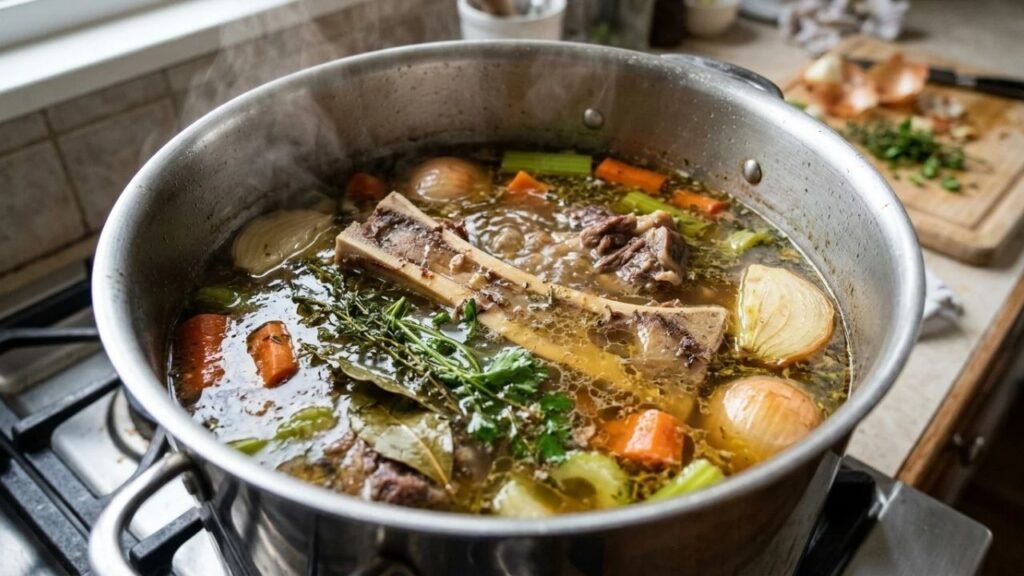
How to Cook Soup Bones in 5 Easy Steps
Step 1: Prepare the Bones
If the bones are frozen, thaw them in the refrigerator before cooking. For a cleaner-tasting broth, you can blanch raw beef bones by covering them with water, bringing it to a boil, and cooking for 5–10 minutes. Drain and rinse the bones, then clean the pot before continuing.
Blanching is optional. Handle raw bones carefully, wash your hands, and clean utensils and surfaces that have come into contact with them.
Step 2: Roast for Deeper Flavor
Preheat the oven to 425°F (220°C). Arrange the bones in a single layer in a roasting pan and cook for 30–45 minutes, until they develop a rich brown color.
Roasting creates a deeper, savory flavor, particularly in beef and lamb broth. Avoid burning the bones, as blackened surfaces can contribute bitterness.
For a lighter broth, skip roasting and proceed directly to the next step. If browned bits remain in the pan, add a little water, scrape them up, and transfer the liquid to the stockpot.
Step 3: Add Water and Aromatics
Place the bones in a large stockpot. Add the water, onion, carrots, celery, garlic, bay leaf, peppercorns, and optional herbs.
Bring the liquid gradually to a gentle simmer over medium heat. The water should cover the bones without filling the pot to the rim.
Once small bubbles begin appearing, reduce the heat. Avoid vigorous boiling, which can suspend particles in the liquid and make the broth cloudy.
Step 4: Simmer Gently
Cook beef bones at a gentle simmer for approximately 4–6 hours. During the first hour, skim off excessive foam with a spoon. Check the liquid level occasionally and add hot water if necessary.
Keep the lid partly covered to limit evaporation while allowing some steam to escape. Frequent stirring is unnecessary.
The broth should develop a pleasant savory aroma and a fuller taste. If the flavor remains weak, continue simmering and check again after another 30–60 minutes.
Step 5: Strain and Season
Turn off the heat and carefully pour the broth through a fine-mesh sieve into a heatproof container. Discard the cooked vegetables and bones.
Taste the strained liquid before adding salt. If it is too concentrated, add a little hot water. If it tastes weak, simmer it briefly to reduce the liquid and concentrate the flavor.
Cool the broth promptly in shallow containers and refrigerate it within two hours of cooking. Do not leave a large pot at room temperature for several hours.
How Long to Cook Soup Bones
Cooking time varies according to bone size, connective tissue, and the type of broth you want.
- Beef bones: Approximately 4–6 hours.
- Chicken bones: Approximately 3–4 hours.
- Lamb bones: Approximately 3–5 hours.
These times are general guidelines for stovetop simmering. Larger bones or mixed cuts may need additional time, so check the flavor rather than relying entirely on the clock.
A slow, steady simmer helps develop flavor without excessive evaporation. Cooking for longer does not always produce better broth, especially when the liquid becomes too concentrated.
If you use a pressure cooker, follow the manufacturer’s instructions for the liquid quantity and cooking time. Pressure-cooking times differ from stovetop methods.
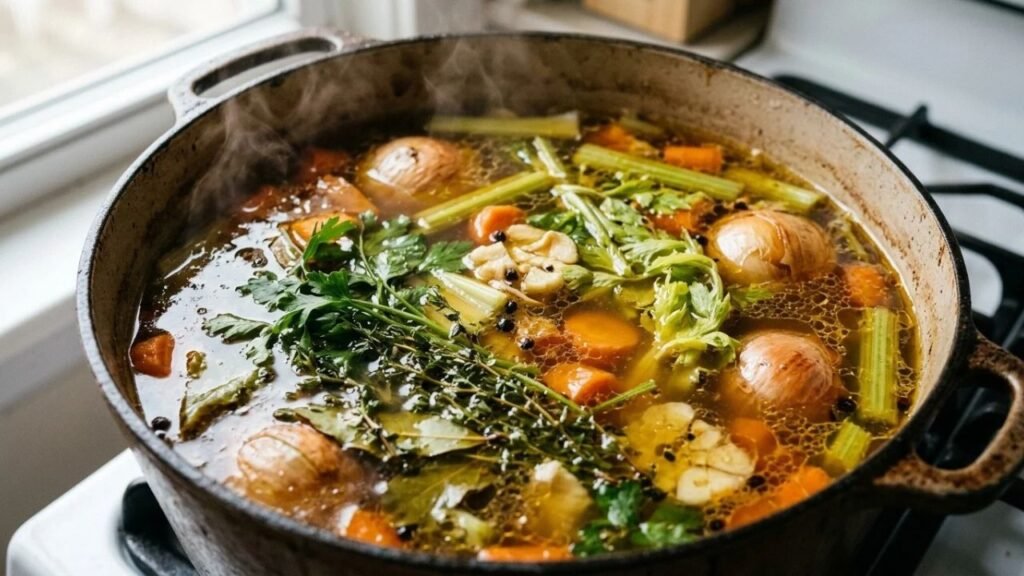
Tips for Rich and Flavorful Broth
A few small adjustments can improve the finished result.
- Combine different bones: Meaty cuts contribute savory flavor, while joints and knuckles can add gelatin.
- Roast when appropriate: Browning creates a deeper flavor and darker color.
- Control the heat: A gentle simmer helps limit cloudiness.
- Measure the water: Too much liquid can dilute the flavor.
- Season near the end: Salt becomes more concentrated as water evaporates.
- Keep the aromatics simple: Onion, carrots, celery, garlic, and bay leaf provide a balanced base.
- Strain carefully: A fine-mesh sieve removes small vegetable pieces and other particles.
A chilled broth may become jelly-like when it contains enough gelatin. However, not every batch will set, and a liquid broth can still be flavorful and useful.
Common Mistakes to Avoid
Boiling too vigorously: Reduce the heat to maintain small, occasional bubbles instead of a rolling boil.
Using too much water: Cover the bones adequately without diluting the liquid unnecessarily.
Adding too much salt: Season gradually, especially if the broth will be reduced or used in another recipe.
Expecting every batch to gel: The final texture depends on the bones, connective tissue, water ratio, and cooking time.
Adding too many seasonings: Strong spices can overwhelm the natural flavor. Begin with modest amounts and adjust to taste.
Cooling too slowly: Divide the broth into shallow containers and refrigerate it promptly.
Ignoring the liquid level: Check the pot during long cooking and add hot water if the bones become exposed.
How to Use Bone Broth
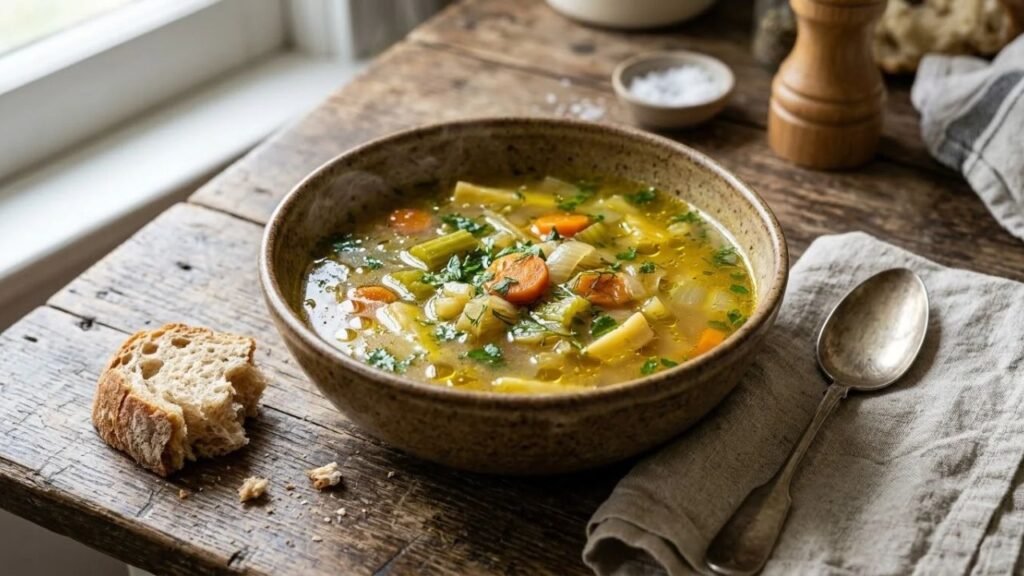
Homemade broth works in many everyday recipes. Its savory flavor can improve a dish without requiring a separate stock-making process.
- Soups: Add noodles, rice, cooked meat, or vegetables.
- Stews: Use it as the cooking liquid for meat, beans, and root vegetables.
- Rice and grains: Replace some or all of the water with broth.
- Gravies and sauces: Use it as a base, adding a suitable thickener if needed.
- Noodle dishes: Warm the broth with vegetables and noodles for a quick meal.
- Braised vegetables: Cook carrots, cabbage, or other firm vegetables in a small amount of broth.
For a simple serving, warm the liquid and finish with chopped parsley or a small squeeze of lemon. If the flavor is particularly strong, dilute it slightly to suit the dish.
How to Store Bone Broth
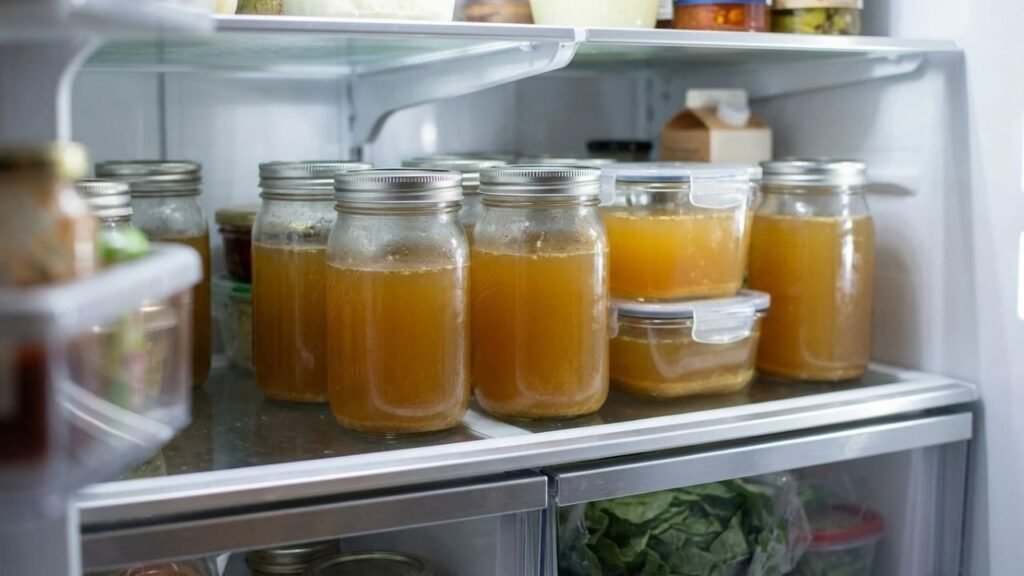
Proper storage helps maintain the quality and safety of homemade broth.
Refrigeration: Store broth in covered containers at 40°F (4°C) or below and use it within 3–4 days.
Freezing: Transfer the cooled broth to airtight, freezer-safe containers, leaving space for expansion. For best quality, use it within 2–3 months. For more guidance, the official website of the United States government redirect on the blog USDAs explains Leftovers and Food Safety including proper refrigeration and reheating practices.
Reheating: Thaw frozen broth in the refrigerator when possible. Reheat it on the stovetop until it reaches a rolling boil, or follow appropriate microwave reheating instructions.
Divide large batches into shallow containers so they cool quickly. Refrigerate within two hours of cooking, or within one hour when the surrounding temperature is above 90°F (32°C).
Label containers with the preparation date. Discard broth that has been stored too long or left at room temperature beyond safe limits. Smell and appearance alone cannot reliably establish whether food is safe.
Frequently Asked Questions
1. Do you need to roast soup bones?
No. Roasting is optional, but it adds a deeper flavor and darker color, particularly to beef and lamb broth.
2. Can you cook soup bones without vegetables?
Yes. Bones and water can make broth, although onion, carrots, celery, and herbs contribute additional flavor.
3. Why is my broth cloudy?
Cloudiness can result from vigorous boiling, frequent stirring, or particles suspended in the liquid. Gentle simmering and careful straining can help produce a clearer result.
4. When should you add salt?
Add most of the salt near the end of cooking. This makes it easier to control the seasoning if the liquid reduces.
5. Can you reuse soup bones?
Yes, but a second batch will generally have a milder flavor because much of the available flavor has already been extracted.
6. How do you know when the broth is ready?
The broth should have a pleasant savory aroma and a developed flavor. Beef bones commonly need 4–6 hours of gentle simmering, while chicken bones usually require less time.
Writing
Conclusion
Cooking soup bones at home is a simple way to prepare rich, flavorful broth for soups, stews, and everyday meals. Using suitable bones, fresh vegetables, and gentle heat helps develop a balanced taste.
Season the broth carefully and store leftovers safely for later use. With a few basic ingredients and a little patience, homemade broth can become a useful addition to your kitchen.